
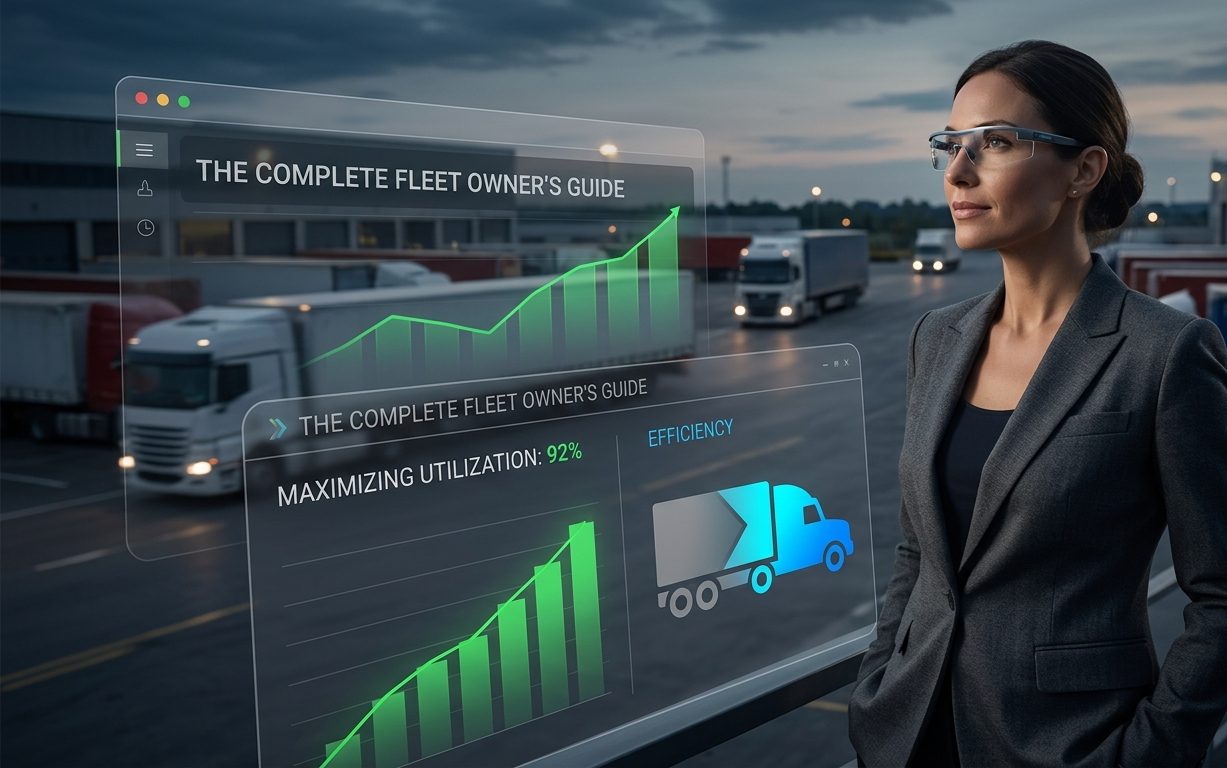
Reducing empty miles has become one of the highest priorities for modern fleet owners and logistics companies seeking to improve profitability and operational efficiency. Every mile driven without freight represents lost revenue while still generating fuel, maintenance, labor, and equipment costs. As transportation costs continue to rise, businesses can no longer afford inefficient routing and poor fleet utilization. By adopting smarter planning, advanced technology, and data-driven decision-making, carriers can significantly reduce unnecessary travel and increase loaded miles. Effective load matching, route optimization, and strategic partnerships help keep trucks moving with paying freight instead of running empty. These improvements not only boost revenue but also lower operating expenses and enhance customer service. In addition, reducing empty miles contributes to lower fuel consumption and reduced carbon emissions, supporting more sustainable logistics operations. Whether managing a single truck or a large fleet, improving asset utilization creates a strong competitive advantage in today's transportation industry. This guide explores the causes of empty miles, their financial impact, and the most effective strategies for minimizing them. By implementing these proven practices, fleet owners can maximize revenue, improve operational performance, and build a more efficient and profitable logistics business.
INTRODUCTION: THE EMPTY MILE PROBLEM IN MODERN LOGISTICS
Empty miles—also known as "deadhead" or "bobtail" miles—represent one of the most significant profit drains in the trucking and logistics industry. These are miles driven without paying freight, whether returning from a delivery location or repositioning to pick up the next load. Industry studies suggest that empty miles account for approximately 20-30% of all miles driven by commercial trucks, costing the industry billions of dollars annually in wasted fuel, maintenance, and operational expenses.
For fleet owners and logistics managers, reducing empty miles is not just an environmental concern—it's a critical business strategy that directly impacts profitability. A truck generating revenue on only 70% of its miles cannot compete with competitors operating at 90% utilization. This comprehensive guide explores proven strategies, technology solutions, and industry best practices to help you minimize empty miles and maximize your revenue potential.
KEY STATISTICS:
- 25% average percentage of empty miles in typical fleet operations
- $6,500+ annual cost per truck from empty miles and fuel waste
- 15-20% potential revenue increase through optimization
UNDERSTANDING EMPTY MILES AND DEADHEAD DISTANCE
What Are Empty Miles?
Empty miles refer to any distance traveled by a commercial vehicle that does not generate revenue. This includes the return trip after delivering cargo, repositioning to a new pickup location, or traveling to a maintenance facility. These miles consume fuel, generate wear on the vehicle, and incur operational costs without producing corresponding income.
Types of Empty Miles
- Return Deadhead: The journey back to your home terminal or next pickup location after completing a delivery. This is typically the largest source of empty miles.
- Repositioning Deadhead: Traveling to a location where freight is available but requires traveling without a load.
- Layover Miles: Driving to a customer location only to wait for the next available load, then repositioning elsewhere.
- Maintenance Trips: Traveling to repair facilities or inspection centers without freight.
- Mandatory Breaks: While not true empty miles, the required rest periods after driving limit revenue-generating time.
Understanding industry vocabulary is essential when discussing empty miles with carriers, brokers, and logistics partners. The term "deadhead" specifically refers to operating a tractor or truck without a trailer. "Bobtail" typically means operating a tractor without cargo, often in different regulatory contexts. "Repositioning" involves moving equipment to a more strategically advantageous location. Fleet managers should standardize this terminology within their operations to ensure clear communication.
KEY INSIGHT: The difference between 75% and 85% utilization might seem small on paper, but for a truck operating 120,000 miles annually, it represents 12,000 additional revenue-generating miles—potentially worth $36,000-$48,000 in additional gross revenue per year.
THE FINANCIAL IMPACT OF EMPTY MILES
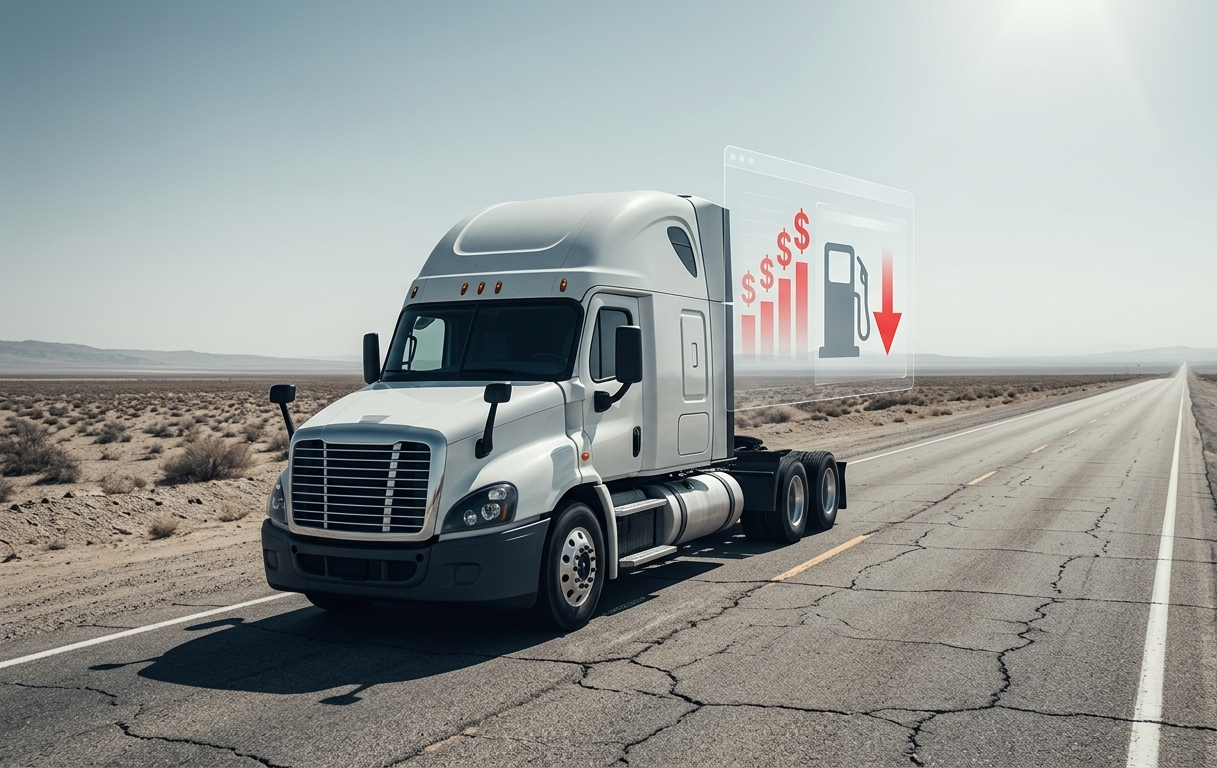
Direct Costs Associated with Empty Miles
Every mile driven incurs real costs, regardless of whether freight is being carried. Understanding these costs is fundamental to calculating return on investment for optimization initiatives:
- Fuel Costs: At current fuel prices, a truck consuming 6-7 miles per gallon burns approximately $1.00-$1.50 per empty mile in fuel alone. For a truck driving 25,000 empty miles annually, this represents $25,000-$37,500 in fuel costs without any revenue offset.
- Maintenance and Repairs: Empty miles contribute equally to vehicle wear as loaded miles. Tire degradation, engine wear, transmission stress, and general maintenance occur regardless of payload. These costs typically run $0.15-$0.25 per mile.
- Driver Wages: Drivers must be compensated for all hours worked, including deadheading time. Depending on compensation structure, this adds $0.30-$0.50 per mile of empty distance.
- Insurance and Permits: Vehicle insurance typically costs the same whether the truck is loaded or empty, representing an allocation of $0.10-$0.20 per mile.
- Depreciation: Vehicle value decreases with mileage regardless of revenue generation, costing approximately $0.10-$0.15 per mile.
When combined, the fully loaded cost of each empty mile ranges from $1.65 to $2.35 per mile. For a truck driving 25,000 empty miles annually (typical for many operations), this translates to $41,250 to $58,750 in pure costs without any offsetting revenue.
COST BREAKDOWN PER CATEGORY:
- Fuel: $1.00-$1.50 per mile / Annual Impact (25,000 empty miles): $25,000-$37,500
- Maintenance & Repairs: $0.15-$0.25 per mile / Annual Impact (25,000 empty miles): $3,750-$6,250
- Driver Wages: $0.30-$0.50 per mile / Annual Impact (25,000 empty miles): $7,500-$12,500
- Insurance & Permits: $0.10-$0.20 per mile / Annual Impact (25,000 empty miles): $2,500-$5,000
- Depreciation: $0.10-$0.15 per mile / Annual Impact (25,000 empty miles): $2,500-$3,750
- TOTAL: $1.65-$2.35 per mile / Annual Impact (25,000 empty miles): $41,250-$65,000
Beyond direct operating costs, empty miles create several indirect financial challenges. Lower asset utilization reduces revenue per truck, making fleet expansion more capital-intensive. Reduced asset velocity means longer payback periods on vehicle investments. Additionally, fleets with high empty mile percentages become less competitive when bidding on freight contracts, as their cost per loaded mile must be higher to achieve profitability targets. This creates a negative feedback loop where underutilized fleets gradually lose market share.
7 PROVEN STRATEGIES TO REDUCE EMPTY MILES AND MAXIMIZE REVENUE
STRATEGY 1: Implement Freight Matching Platforms and Load Boards
Modern freight matching technology connects carriers with available loads in real-time, dramatically reducing the time trucks sit empty. Digital load boards aggregate freight from multiple sources, allowing drivers and dispatchers to identify loads in the direction of their next destination or home base.
Implementation Steps:
- Subscribe to multiple load boards (DAT, Loadr, Relay, Echo) for maximum load visibility
- Train dispatchers on utilizing matching algorithms and filtering by profitability
- Establish relationships with freight brokers in key lanes
- Set minimum rate thresholds to avoid unprofitable loads
- Analyze historical data to identify peak opportunity windows
STRATEGY 2: Develop Strategic Lane Partnerships
Building long-term relationships with key shippers and freight brokers creates predictable, profitable freight flows. Dedicated lanes provide consistent revenue while reducing the time and administrative burden of finding loads.
Strategic Approach:
- Identify high-volume lanes in your service area with repeat demand
- Negotiate contracts that provide minimum volumes and stable rates
- Offer capacity commitments in exchange for rate stability
- Develop back-haul lanes that complement primary lanes
- Create partnerships with complementary carriers to maximize network effects
STRATEGY 3: Optimize Route Planning and Load Sequencing
Strategic route planning ensures trucks move in profitable directions, reducing repositioning deadhead. Advanced planning considers future loads when determining current route completion strategies.
Best Practices:
- Use predictive load forecasting to plan routes based on future demand
- Accept slightly longer-haul loads if they position trucks in high-demand areas
- Implement geographic load clustering to reduce inter-load distances
- Coordinate with other carriers in shared logistics networks
- Consider accepting loads with lower margins if they eliminate costly deadhead
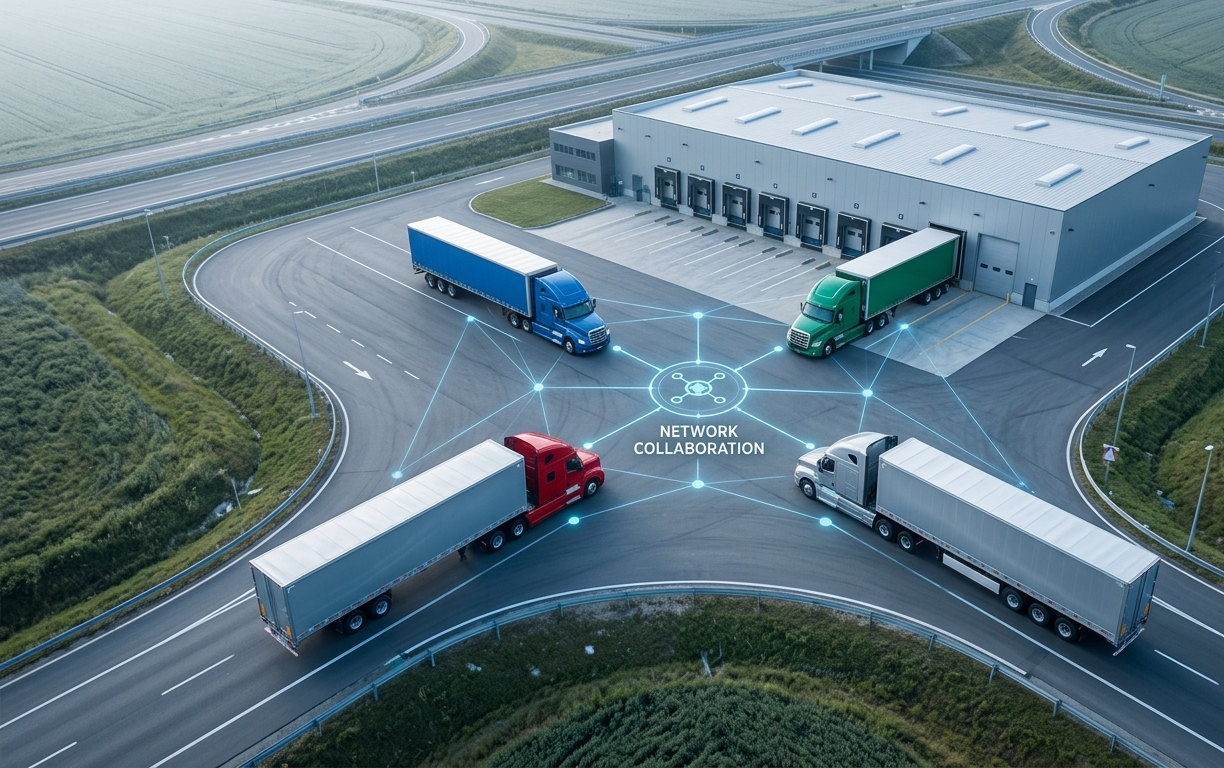
STRATEGY 4: Establish a Collaborative Carrier Network
Pooling resources with complementary carriers creates network effects that dramatically improve asset utilization. Rather than competing for the same lanes, carriers can exchange deadhead situations and coordinate to eliminate empty miles across the network.
Network Structure:
- Form alliances with 3-5 carriers in non-competing regions
- Create a shared load opportunity communication channel
- Establish fair compensation mechanisms for inter-carrier load exchanges
- Develop legal frameworks protecting member interests
- Implement centralized dispatch software enabling real-time coordination
STRATEGY 5: Leverage Customer Consolidation and Cross-Docking
Rather than making single-stop deliveries across a geographic territory, consolidating shipments for cross-docking facilities enables more efficient routing. This reduces the number of overall trips and associated deadhead.
Implementation Strategy:
- Evaluate whether consolidation reduces total miles despite longer initial hauls
- Negotiate cross-docking fees and responsibilities with facility operators
- Coordinate shipment timing to enable consolidation windows
- Invest in real-time tracking to manage in-transit consolidation
- Balance inventory carrying costs against transportation savings
Drivers ultimately control vehicle utilization through their acceptance decisions and operational choices. Incentive programs that reward high-utilization drivers drive behavioral change across the fleet.
Effective Incentive Structures:
- Mileage-Based Bonuses: Offer $0.01-$0.03 per loaded mile for drivers maintaining above 85% utilization
- Utilization Bonuses: Monthly bonuses for top utilization performers ($100-$500)
- Safety Multipliers: Apply bonus multipliers to drivers with strong safety records
- Home Time Guarantees: Ensure high-utilization drivers receive preferred home time windows
- Equipment Upgrades: Provide premium trucks to consistent high-utilization drivers
STRATEGY 7: Develop Specialized Service Offerings
Creating niche services that other carriers struggle to provide creates opportunities to monetize empty miles and improve overall utilization.
Specialized Service Examples:
- Expedited Freight: Premium rates for time-sensitive shipments enable higher-margin loads
- Specialized Equipment: Refrigerated, flatbed, or hazmat services command premium rates
- Reverse Logistics: Returns management and product recovery create return loads
- Temperature-Controlled Transport: Pharmaceutical and food logistics provide stable, premium-rate lanes
- Last-Mile Delivery: Retail and e-commerce final-mile services leverage existing metropolitan presence
TECHNOLOGY SOLUTIONS FOR EMPTY MILE OPTIMIZATION
Dispatch and Route Optimization Software
Modern dispatch platforms provide real-time visibility into fleet position, load availability, and customer demand. Advanced algorithms automatically generate optimal routes considering current vehicle positions, load profitability, and future demand forecasts.
- Key Features to Evaluate:
- Real-time GPS tracking of all fleet assets
- Automated route optimization reducing manual planning time
- Integration with multiple load boards
- Predictive load forecasting capabilities
- Driver communication and job assignment
- Performance analytics and utilization dashboards
- Accounting integration for real-time profitability calculation
Telematics and IoT Solutions

Telematics systems provide granular data on vehicle performance, fuel consumption, driver behavior, and utilization patterns. This data is essential for identifying optimization opportunities and measuring improvement initiatives.
Data Analytics to Prioritize:
- Empty mile percentage by vehicle, driver, and lane
- Fuel efficiency metrics indicating load weight optimization
- Idle time analysis revealing inefficient stops
- Speed and harsh braking data indicating driver behavior
- Maintenance alerts enabling preventive service
- Utilization trends and seasonal variation patterns
AI-Powered Load Matching and Prediction
Artificial intelligence platforms analyze historical freight patterns to predict available loads at specific times and locations. This predictive capability enables proactive positioning rather than reactive load searching.
Capabilities:
- Forecast demand patterns by lane, time, and season
- Identify emerging opportunities before competitors
- Calculate optimal positioning decisions
- Suggest complementary lanes and freight combinations
- Rate optimization recommendations
Blockchain and Smart Contracts
Emerging blockchain solutions enable direct shipper-carrier connections, eliminating broker intermediaries and associated delays. Smart contracts automate payment and load confirmation, reducing administrative overhead.
Benefits:
- Faster load confirmation and reduced acceptance windows
- Lower transaction costs through disintermediation
- Transparent rate discovery and negotiation
- Automated settlement and payment
INDUSTRY BEST PRACTICES FOR EMPTY MILE REDUCTION
Establish a Culture of Utilization Awareness
The most successful fleets build organizational cultures where utilization is a key performance indicator tracked and rewarded at every level. From dispatchers to senior management, all stakeholders should understand that empty miles directly impact profitability.
- Cultural Implementation:
- Include utilization targets in performance reviews
- Display real-time utilization dashboards in dispatch offices
- Share monthly utilization reports with all fleet employees
- Celebrate high-utilization drivers and lanes
- Conduct regular training on optimization strategies
Implement Comprehensive Data Analytics Programs
Data-driven decision-making separates industry leaders from laggards. Successful fleets invest in analytics infrastructure that provides actionable insights rather than merely tracking historical performance.
Analytics Framework:
- Create utilization dashboards with drill-down capability to individual drivers and lanes
- Establish cost per mile metrics by load type, lane, and season
- Conduct root cause analysis when utilization drops
- Benchmark against industry standards (85%+ utilization is achievable)
- Test new strategies with controlled pilot programs before fleet-wide deployment
Develop Contingency Networks and Flexibility
Operational flexibility enables rapid response to market opportunities. The most agile fleets—those willing to deviate from traditional lanes when better opportunities arise—achieve the highest utilization rates.
Building Flexibility:
- Maintain relationships with multiple brokers across all regions
- Train drivers to handle diverse equipment and freight types
- Maintain flexible customer relationships rather than exclusive arrangements
- Invest in equipment that serves multiple freight categories
- Develop rapid repositioning protocols for unexpected opportunities
Regular Training and Knowledge Sharing

Dispatcher and driver education directly impacts utilization outcomes. Ongoing training ensures staff understand the "why" behind utilization initiatives and can identify optimization opportunities.
Training Program Elements:
- Monthly dispatcher training on load board navigation and rate evaluation
- Quarterly driver meetings covering efficiency and incentive programs
- Sharing success stories and lessons learned across the fleet
- Cross-training between dispatchers and operations management
- Industry conference attendance by key personnel
KEY PERFORMANCE INDICATORS TO TRACK
Monitor these KPIs to measure empty mile reduction progress:
- Utilization Rate: Revenue-generating miles ÷ Total miles (Target: 85-95%)
- Empty Mile Percentage: Empty miles ÷ Total miles (Target: 5-15%)
- Revenue per Mile: Gross revenue ÷ Total miles
- Cost per Mile: Total operating costs ÷ Total miles
- Load Board Response Time: Minutes from load availability to acceptance
- Deadhead Distance: Average empty miles between loads (Target: Under 50 miles)
CONCLUSION: THE PATH FORWARD
Reducing empty miles is not a one-time project—it's an ongoing operational discipline that requires sustained commitment from leadership, dispatchers, and drivers. The financial opportunity is substantial: a single truck improving utilization from 75% to 85% generates $36,000-$48,000 in additional annual gross revenue. For a 50-truck fleet, this represents $1.8M to $2.4M in additional gross revenue.
The strategies outlined in this guide—from freight matching to network partnerships to technology implementation—are proven across the industry. The most successful fleets combine multiple approaches rather than relying on any single tactic. They build organizational cultures where utilization is understood as a key business driver and empower their teams with tools, training, and incentives to achieve excellence.
Start with the strategies that require minimal investment (load boards, dispatcher training, driver incentives) and build toward more comprehensive solutions. Most fleets should expect to achieve 10-15% utilization improvements within 90 days of focused effort, with additional gains as systems mature.
The competitive landscape increasingly demands operational excellence. Fleets that successfully minimize empty miles will command premium rates, attract top drivers, and achieve superior profitability. The time to begin is now.