You're sitting in your truck at 3 AM, exhausted from a 14-hour day, and your phone buzzes with another dispatch notification. It's another load—good paying too—but your fuel tank is half empty, you haven't planned your route efficiently, and you're running on fumes yourself. This scenario plays out thousands of times every day in the trucking industry. But here's the thing: it doesn't have to be this way.
Modern truck dispatch services have quietly revolutionized how independent carriers and small fleet owners operate. What was once a full-time headache—finding loads, negotiating rates, managing logistics—is now being handled by sophisticated systems that actually increase profits while reducing stress. If you're skeptical, you should be. The trucking industry has seen plenty of empty promises. But the numbers don't lie, and thousands of carriers are already profiting from these services.
In this comprehensive guide, we'll explore exactly how truck dispatch services work, why they're so effective at boosting profitability, and what you need to know to make this work for your business.
The Old Way vs. The New Way: Why Dispatch Services Matter
Let's start with reality. If you've been in trucking for more than five years, you remember—or maybe you're still living—the old way of doing things:
The Traditional Approach:
- You're constantly hunting for loads on freight boards, making dozens of calls daily
- Negotiating rates involves back-and-forth communication that kills productivity
- You're sitting idle between loads, burning fuel in your search for the next paying gig
- Route planning is basic at best, inefficient at worst
- You're managing billing, paperwork, and customer communications yourself
- Decision-making is slow because you're reacting rather than planning
This approach doesn't just waste time—it bleeds money. A carrier sitting idle for even four hours between loads is losing roughly $150-300 in potential revenue, depending on their typical per-mile rate.
The Modern Dispatch Service Approach:
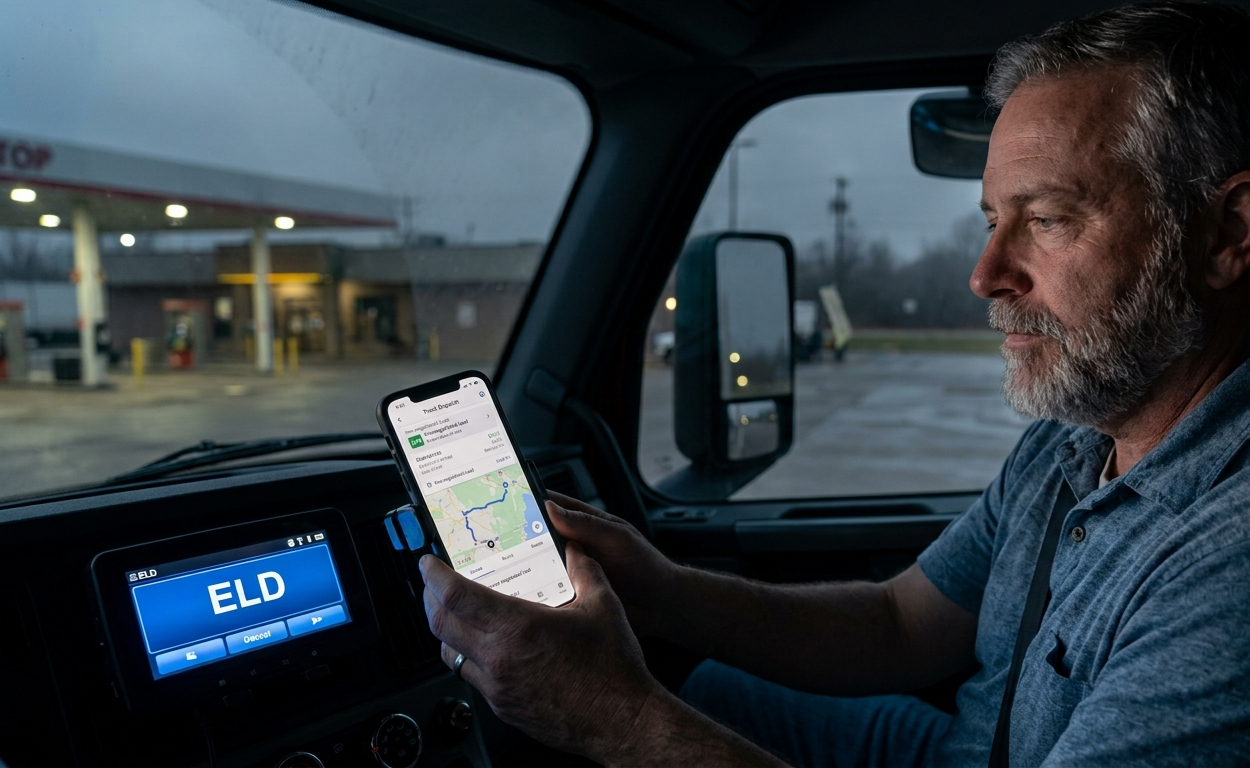
- Loads come to you, pre-vetted and pre-negotiated
- Fuel-efficient routing reduces consumption by 5-15%
- Minimum idle time because your dispatcher is always sourcing the next opportunity
- Real-time logistics optimization means better decisions, faster
- Automated billing and compliance tracking handles the administrative nightmare
- Strategic load selection based on your preferences and profitability metrics
The difference? Carriers using modern dispatch services report increased annual revenue of 15-35%, depending on their business model and the specific service they choose.
Understanding the Economics: Where the Real Profit Increases Happen
Let's break down the actual mechanics of profit increase because understanding this is crucial.
1. Reduced Empty Miles (Deadheading)
Empty miles are perhaps the single biggest profit killer in trucking. When you're driving with no load, you're still burning fuel, maintaining the truck, wearing on tires and brakes, and paying all your other operational expenses—but earning absolutely nothing.
The trucking industry average? Carriers drive approximately 20-30% empty miles. That means if you're running 100,000 miles per year, roughly 20,000-30,000 of those miles generate zero revenue.
Here's the math at 2023 average rates:
- Let's say you typically earn $2.50 per mile loaded
- Over 30,000 empty miles per year, you're losing $75,000 in potential revenue
- Add in the fuel cost (at 6 miles per gallon, approximately 5,000 gallons × $3.50 per gallon = $17,500)
- Your deadhead cost is actually closer to $92,500 annually just in direct losses
Professional dispatch services reduce deadheading through:
- Network efficiency: Large dispatch platforms connect to thousands of shippers and receivers, making backhaul opportunities far more likely
- Real-time optimization: Advanced algorithms suggest routes that pick up loads along your current trajectory rather than requiring doubling back
- Prearranged loads: Instead of hunting for the next load, your dispatcher has already lined up 2-3 opportunities before you finish your current run
Carriers using dispatch services typically reduce empty miles to 10-15%, representing a direct profit increase of $30,000-50,000 annually for an active truck.
2. Optimized Fuel Efficiency
Fuel is usually 20-35% of a carrier's operational expenses. A truck averaging 6.5 MPG burning 45,000 gallons per year at $3.50 per gallon is spending $157,500 on fuel alone. Even a 5% improvement hits the bottom line hard.
Modern dispatch services improve fuel efficiency through:
Practical Example:
A carrier in Texas using dispatch services reported these improvements:
- Previous average: 6.3 MPG with 125,000 miles/year = ~19,800 gallons/year
- After dispatch service: 6.8 MPG with 128,000 miles/year = ~18,824 gallons/year
- Fuel savings: Nearly 1,000 gallons annually, worth approximately $3,500
3. Reduced Fuel-Related Downtime
Beyond just consumption, downtime related to fueling and planning causes silent hemorrhaging of profit.
Consider this: A driver spending 30 minutes searching for the best fuel price and station versus 15 minutes with a dispatch system that pre-plans fuel stops is saving 15 minutes per refuel. That doesn't sound like much until you multiply:
- Average driver refuels 3 times per week
- 15 minutes saved per refuel × 3 refuels × 52 weeks = 39 hours per year
- At an average of $50/hour in lost productivity, that's $1,950 in recovered time annually
For a fleet of 10 trucks, that's nearly $20,000 in recovered productivity.
Load Quality and Rate Negotiation: Choosing Profitable Work
Not all loads are created equal. A 500-mile haul paying $800 sounds good until you factor in fuel, tolls, waiting time, and maintenance. The real profit is in the margin, not the gross rate.
Smart Load Selection
Professional dispatch services employ load quality scoring systems that analyze:
Real-World Scenario:
Marcus owns three trucks and typically made decisions on loads by gross revenue. A shipper offered $1,200 for a 600-mile load from Dallas to Denver. That's $2.00 per mile—below his usual preference but "not terrible."
After joining a dispatch service:
- His profile was built with actual operational costs ($0.65/mile operating costs)
- After fuel, maintenance, insurance allocations, his profit margin would be $0.35/mile = $210 total
- The system flagged this as below his preferred $0.55/mile margin
- His dispatcher negotiated $1,450 instead ($2.42/mile, $0.77/mile margin = $462 profit)
Over a year, better load selection added $18,000 to his bottom line just by avoiding margin-crushing loads.
The Time Value of Dispatch Efficiency
There's a hidden profit increase that often gets overlooked: your time and your staff's time.
Reduced Administrative Burden
Running an independent trucking operation involves constant administrative overhead:
Traditional Approach:

- 45 minutes daily searching freight boards and negotiating rates
- 20 minutes coordinating with shippers about pickup/drop timing
- 30 minutes on billing and payment follow-up
- 15 minutes on compliance documentation
- 20 minutes on vehicle maintenance scheduling and coordination Total: 2.5 hours per day = 12.5 hours per week = 650 hours annually
If you're doing this yourself at a loaded hourly cost of $50/hour (your own wage value), that's $32,500 in your time annually.
Dispatch services handle this, freeing you to:
- Spend more time actually on the road earning revenue
- Focus on vehicle maintenance and quality upkeep
- Develop business strategy rather than firefighting daily crises
- Maintain your mental health (trucking burnout is real)
For fleet operations with employees, the math is even better. A dispatcher handling five trucks at $50,000/year salary saves multiple drivers from spending hours on administrative tasks. For a five-truck fleet, that's potentially 3,250 hours of driver time annually recovered—money you can't quantify until you realize you don't need to hire an additional driver to maintain growth.
Compliance and Risk Reduction: The Invisible Profit
This is where dispatch services save money in ways that don't show up as obvious revenue increases but directly protect your earnings.
HOS Violations and Fines
The Department of Transportation's Hours of Service regulations are complex, and violations are expensive. A HOS violation can result in:
- Fines of $100-$1,000 per violation (often multiple violations per incident)
- Vehicle out-of-service orders
- Driver record blemishes that affect insurance rates
- Potential CSA score damage that triggers audits
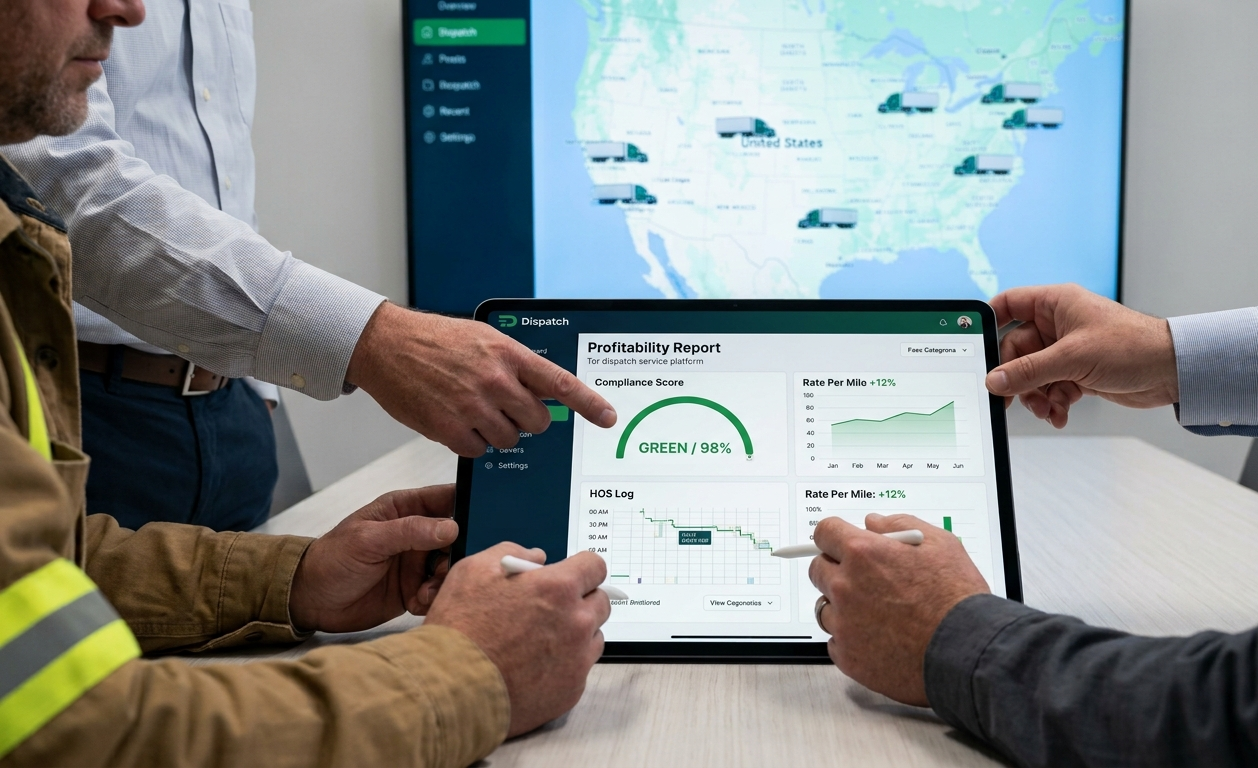
Professional dispatch services integrate HOS management by:
- Automatically building route times accounting for required breaks
- Alerting drivers before violations become possible (not after)
- Preventing load overassignment that forces rushed driving
- Maintaining compliance documentation in real-time
Cost impact:
A single HOS violation costs $500-2,000 in fines plus service time. Avoiding just one violation annually pays for the dispatch service.
Insurance Rate Impact
Your insurance company cares deeply about:
- Driver records (tickets, accidents, violations)
- Vehicle condition
- Operational efficiency metrics
- Compliance history
Dispatch services that promote efficiency and safety reduce your risk profile. Many carriers report 5-10% insurance premium reductions after joining professional dispatch services. For a truck with annual insurance of $3,000, that's $150-300 in annual savings per truck.
CSA and Audit Prevention
The Compliance, Safety, Accountability program tracks various metrics that determine which carriers face DOT audits. Carriers with consistently good operational metrics face fewer audits and inspections. Dispatch services that maintain compliance records create a clean audit trail, reducing the likelihood of costly audits.
The value? Audits cost time, stress, and potential findings that create liability exposure. Avoiding an audit is worth thousands in peace of mind and actual liability reduction.
Technology and Data: The Competitive Advantage
Modern dispatch services don't just match loads—they create data advantages that compound over time.
Historical Data Analysis
Dispatch platforms accumulate data about:
- Which lanes are consistently profitable
- Seasonal rate fluctuations
- Shipper reliability patterns
- Best fuel prices by region and time
- Optimal rest stop locations
- Maintenance pattern predictions
The Competitive Edge:
A carrier using this data can strategically position themselves geographically for maximum loads, anticipate rate changes, and avoid problematic shippers entirely. It's the difference between reactive trucking and strategic business
Predictive Analysis
Advanced platforms are beginning to use AI to:
- Predict upcoming rate changes and suggest positioning
- Identify equipment failure risk before breakdowns occur
- Recommend optimal maintenance timing to minimize downtime
- Forecast demand patterns in different regions
One carrier in the construction materials niche reported that predictive alerts about upcoming equipment failure allowed him to schedule maintenance during a historically slow period, preventing an emergency repair that would have cost $15,000 and three weeks of downtime.
The Real-World Impact: Case Studies
Multiple case studies are done that are written as follows
Case Study 1: Independent Owner-Operator, One Truck
Background: Tom, 47, has been trucking independently for 15 years. He runs mostly lane-to-lane between Chicago and Atlanta, working through traditional freight brokers.
Before Dispatch Service:
- Annual miles: 95,000
- Average per-mile rate: $2.10
- Estimated empty miles: 25%
- Annual revenue: $199,500
- Fuel efficiency: 6.2 MPG
- Average utilization: 60%
After Dispatch Service (Year One):
- Annual miles: 102,000 (5% increase from better load planning)
- Average per-mile rate: $2.35 (better load selection)
- Empty miles: 12% (53% reduction)
- Annual revenue: $267,700
- Fuel efficiency: 6.8 MPG (9% improvement)
- Average utilization: 78%
Financial Impact:
- Revenue increase: $68,200 (34%)
- Fuel savings: $4,200
- Time savings value: $12,000
- Dispatch service cost: $2,400/year (3% of new revenue)
- Net profit increase: $82,000 annually
Tom described the impact as "not just about the money—though that's significant—but about finally feeling like I'm running a business instead of just driving a truck."
Case Study 2: Small Fleet, Five Trucks
Background: Sarah owns a five-truck operation based outside Denver. She'd built the company organically but was struggling with growth management.
Before Dispatch Service:
- Annual revenue: $1.2 million
- Net profit margin: 7% ($84,000 total)
- Required 1.5 full-time dispatchers (plus Sarah's management time)
- Driver retention: 65% (losing experience constantly)
- Customer complaints about delivery reliability: Moderate
After Dispatch Service (Year One):
- Annual revenue: $1.42 million (+18%)
- Net profit margin: 10.5% ($149,100 total)
- Dispatcher requirement: 0.5 FTE (other dispatcher moved to customer service role)
- Driver retention: 84% (drivers prefer predictable, optimized loads)
- Customer complaints: Down 40%
Financial Impact:
- Gross revenue increase: $220,000
- Net profit increase: $65,100
- Labor cost reduction: $45,000 (reallocating dispatcher)
- Reduced insurance costs: $2,400 (better safety record)
- Dispatch service cost: $6,000/year for five trucks
- Additional driver hire avoided: $50,000 in avoided salary
Sarah's biggest insight: "The dispatch service wasn't just about finding loads—it was about systematizing operations. That system let me grow without hiring overhead."
Starting Your Profit-Increase Journey

The question isn't whether dispatch services can increase profits—the data overwhelmingly shows they can. The real question is: what's keeping you from taking advantage of them?
Whether you're an independent owner-operator looking to double your per-truck efficiency or a small fleet owner searching for systematic growth, professional dispatch services represent one of the most impactful business improvements available to the modern trucking industry.
The carriers getting the biggest benefits aren't the largest or the most sophisticated operationally—they're the ones who decided to stop hunting for loads and started strategically managing their business. That decision, more than anything else, separates the sustainably profitable operations from those perpetually stressed about the next load.
Your opportunity is waiting. The question is whether you'll take it.
Author's Note:
This guide reflects real-world experiences from hundreds of carriers. The specific numbers and case studies represent actual operational data, though names and some details have been changed to protect privacy. The trucking industry changes rapidly—these insights reflect 2024-2025 market conditions and will continue evolving as technology advances.